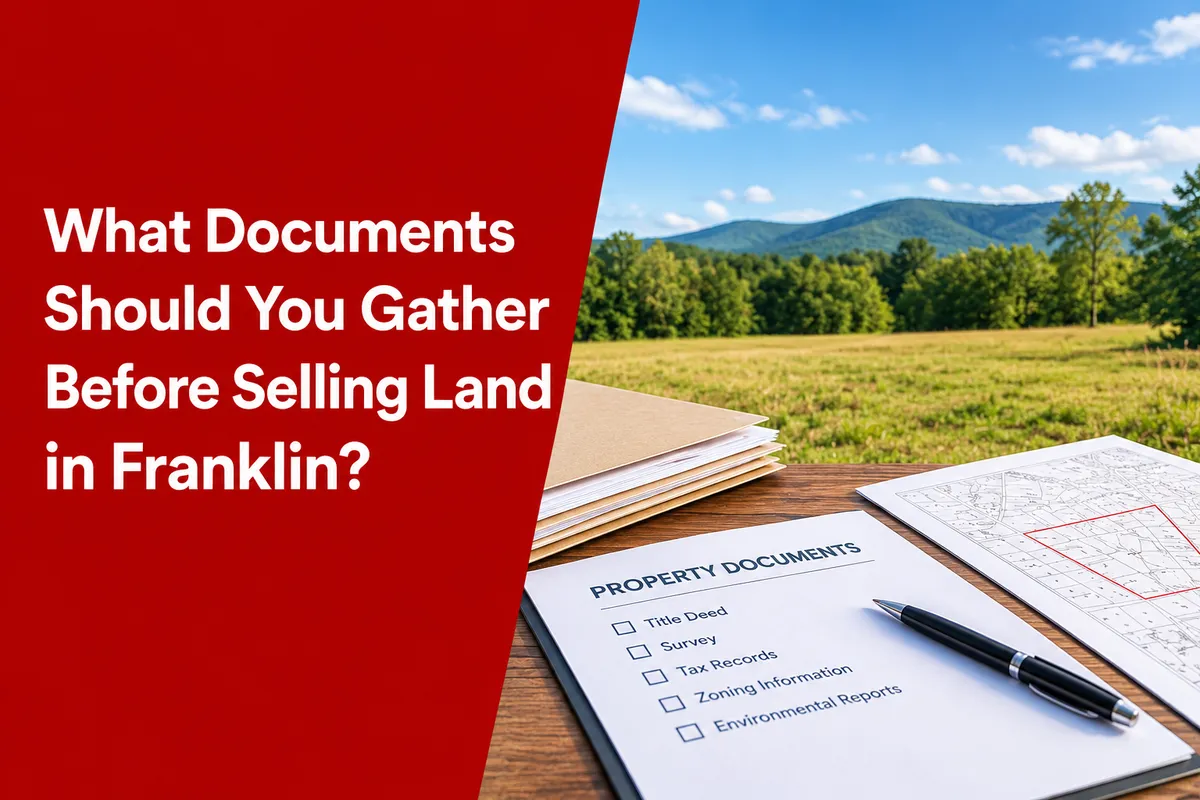
What Documents Should You Gather Before Selling Land in Franklin?
Selling land in Franklin, Tennessee, involves more than agreeing on a price and signing a purchase agreement. Before marketing a vacant lot, residential parcel, or larger tract of property, it helps to organize the paperwork that establishes ownership, clarifies property boundaries, and explains how the land may be used.
Having the right documents ready can help reduce delays, answer buyer questions, and make the transaction easier to manage. For landowners working with Realtors in Franklin, preparation also makes it easier to share accurate property information with prospective buyers.
Start With Proof That You Own the Property
The first document to locate is your property deed. A deed identifies the legal transfer of ownership and provides important details about the property. Buyers and closing professionals may need this information to confirm the seller's ownership and prepare the transaction.
If you inherited the land, received it through a family transfer, or own it jointly with another person, additional documentation may be necessary. The paperwork depends on how the property was transferred and who currently holds legal title.
Gather the most recent deed you have, along with any relevant ownership or transfer documents. If the property's ownership history is unclear, a title professional can help identify what additional records may be required.
Check the Parcel Details Before Advertising the Land
Land descriptions can be more complicated than residential street addresses. A parcel may be identified by a legal description, parcel number, recorded plat, or other county property records.
For land in Franklin, Williamson County property records can be a useful starting point for locating parcel information. These records can help you compare the property's identification details with the documents you already have.
Keep copies of any available:
Property tax statements or assessment records
Recorded plats or subdivision maps
Legal descriptions and parcel identification details
Previous closing documents that describe the land
Remember that tax maps and online parcel records do not necessarily establish the exact legal boundary of a property. If the boundaries are uncertain, a survey may be needed.
Locate a Recent Survey, If One Exists
A survey can show the parcel's boundaries, dimensions, and other features identified by the surveyor. It may also help clarify the location of improvements, easements, or potential boundary concerns.
If you already have a survey, find the complete document and check when it was prepared. A buyer or closing professional may ask whether it remains suitable for the current transaction.
If no survey is available, consider asking a qualified surveyor whether a new one would be useful. This can be especially important for irregularly shaped parcels, land near neighboring properties, or sites where the boundary is not obvious.
Do not rely solely on fences, tree lines, or informal markers to establish legal boundaries.
Organize Property Tax and Ownership Expense Records
Property tax records help document the parcel's tax identification and provide information about its assessed value and tax history. Gather recent tax bills and any relevant notices so you can respond to reasonable buyer or closing questions.
It is also useful to collect records of property-related expenses when available, such as land maintenance costs, association dues, or other recurring charges.
These documents do not replace a review of outstanding taxes, liens, or other title matters. A title company or closing attorney can help determine which items need to be addressed before closing.
Gather Information About Access, Easements, and Utilities
Access can significantly affect how a buyer evaluates a piece of land. Before listing a parcel, collect any documents that explain how the property connects to a public road or whether access depends on an easement across another property.
Relevant records may include recorded easements, shared driveway agreements, road maintenance agreements, and utility easements.
For land outside central Franklin, access and utility arrangements may differ from those of parcels in established neighborhoods. Clear documentation helps buyers understand what is known and what may require further investigation.
Check Zoning and Land-Use Information
A buyer's intended use for land may depend on zoning, applicable development regulations, access, and site-specific conditions. If you have zoning correspondence, approvals, permits, or other official land-use documents, organize them before marketing the property.
Franklin and Williamson County have different planning and regulatory responsibilities depending on the parcel's location and jurisdiction. Confirm which local authority handles the property's zoning and land-use questions before relying on a particular set of requirements.
If the property has been considered for a home, subdivision, or another development, keep any relevant official approvals and supporting documents. Avoid promising that a particular project can be built unless the necessary permissions and conditions have been verified.
Include Environmental and Site-Condition Records
Some land parcels have records that help explain their physical conditions or development limitations. Depending on the property, useful documents might include soil evaluations, septic-related records, drainage information, flood-related documents, or environmental assessments.
Not every parcel requires every type of assessment. The appropriate documents depend on the land's characteristics, location, and intended use. If you do not have a report, be transparent about that rather than suggesting that the property has been evaluated.
For parcels where septic systems or private water supplies may be relevant, contact the appropriate local authority to determine what records exist and whether further evaluation is needed.
Prepare the Paperwork Needed for Closing
Once a buyer is ready to proceed, the closing team will identify the documents required to complete the sale. Depending on the circumstances, these may include identification, tax-related forms, payoff information, entity authorization documents, or additional paperwork connected with the property's ownership.
If the land is held by a trust, company, or multiple owners, confirm who has authority to sign and whether supporting documents are needed. If there is a mortgage, lien, estate-related issue, or unresolved ownership question, seek guidance from the appropriate closing professional before setting expectations about the closing date.
The exact requirements vary by transaction. Gathering existing records early gives the closing team more time to identify missing information.
How Dean & Jay Nelson Can Help You Prepare for a Land Sale
Land sales require a different kind of preparation from selling a traditional home. Buyers may want to understand the parcel's boundaries, access, permitted uses, and available records before deciding whether the property suits their plans.
Dean & Jay Nelson, through Tennessee Home Search, can be a starting point for discussing your property sale and the steps involved in preparing land for the market. Before relying on any specific service or credential, confirm the details directly with the team.
For owners selling land in Franklin, preparation can also connect with broader real estate decisions in nearby communities. A property owner considering land in Brentwood may need to organize similar ownership and survey documents. Sellers with property in Nashville may need to confirm which local jurisdiction governs the parcel. Landowners in Hendersonville or Mount Juliet should also verify the applicable local records and requirements. In Spring Hill, confirming the parcel's location and governing authority is equally important.
The paperwork will vary from property to property, so a document checklist should be tailored to the specific parcel rather than treated as a universal list of mandatory items.
A Practical Final Check Before Listing
Before marketing your Franklin land, place your available records in one folder and note any documents you still need to locate. Begin with the deed, parcel details, tax records, and any existing survey. Then add relevant access, zoning, utility, and site-condition documents.
You do not need to have every possible report in hand before discussing a sale. However, identifying gaps early helps you avoid making unsupported statements and gives buyers a clearer picture of the property.
For questions involving legal ownership, title defects, tax obligations, or development approvals, consult the appropriate attorney, title professional, surveyor, or local government office.
The goal is simple: make the property's ownership and available information easier to understand, so the sale can move forward with fewer surprises.
Frequently Asked Questions
1. What is the most important document when selling land in Franklin?
The property deed is a key starting point because it helps establish ownership. Additional title and closing documents may also be required.
2. Do I need a survey to sell land in Franklin, TN?
Not every sale requires a new survey. A buyer, title professional, or transaction-specific requirement may make one necessary or advisable.
3. Where can I find parcel records for land in Franklin?
Start with Williamson County property records and confirm whether the parcel falls under the City of Franklin or another local jurisdiction.
4. Should I provide zoning information to potential buyers?
Share official zoning or land-use records you have, but avoid guaranteeing a particular use or development outcome without verification.
5. What if I cannot find the original deed?
Contact the appropriate county Register of Deeds or a title professional to ask about locating recorded ownership documents.